

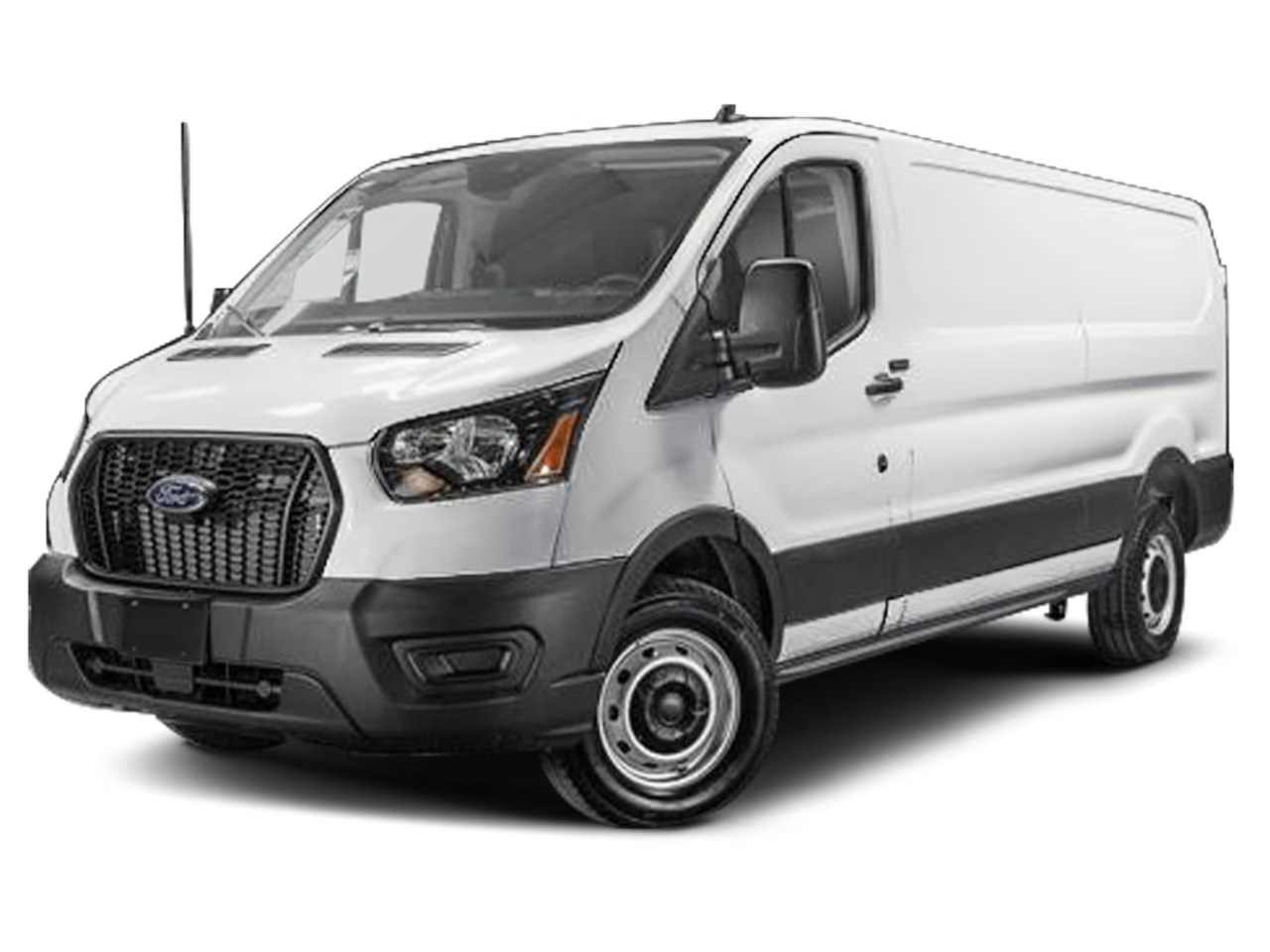
Winterizing Your Transit-350 Cargo Van for Long Island Routes
Posted at Fri, Dec 11, 2026 1:00 PM
THE SHORT ANSWER
Winterize a Transit-350 by checking or upgrading the tires, load-testing the battery, switching to winter washer fluid and fresh wipers, and keeping road salt off the underbody all season. Rear-wheel-drive vans need more care in how they're loaded and driven, and an all-wheel-drive Low or Medium roof Transit-350 is worth a look if your routes stay rough all winter.
Your van doesn't get snow days, and on Long Island the work keeps coming whether the roads are dry, salted or buried. At Sayville Ford in Sayville, we see Transit-350 cargo vans every week, and the ones that get through winter without a missed day usually had a little attention in December. Here's how we'd prepare a Transit-350 for the cold months, from the tires up to the roof, with the South Shore's salt and the LIE's slush in mind.
IN THIS POST
Why Long Island Winters Are Hard on a Work Van
A Transit-350 that runs a route here has a different winter than a commuter car does. It starts cold before dawn and idles at job sites. It makes dozens of short hops with the doors opening constantly, and it spends hours on roads that stay wet with brine and rock salt from December into March.
Our weather adds its own twist. A nor'easter can drop heavy, wet snow on the South Shore one day and freeze it into ruts overnight, and the air near the Great South Bay carries salt even when the pavement is dry. That mix of moisture, salt and freeze-thaw cycles wears out batteries, tires, brakes and underbodies faster than cold alone ever would.
Winterizing isn't one big job. It's a handful of checks and habits that keep the van earning money instead of waiting on a tow truck in a parking lot. Most take a few minutes in your driveway. A few are better left to a technician who works on these vans all the time, and we'll point those out as we go.
We'd tackle them in roughly this order, starting with what touches the road and working up to the roof.
Tires Come First
If the tires can't grip, nothing else on this list matters much. Work vans commonly run all-season tires, which are fine on a dry December afternoon on Sunrise Highway and far less convincing on a slushy side street in Bohemia at six in the morning. For routes with North Shore hills, unplowed driveways or starts before the plows have been out, dedicated winter tires are the single biggest upgrade you can make.
Whatever you run, check these before the first storm:
- Tread depth across the full width, not just the outer edge
- Pressure on a cold morning, since it drops as temperatures fall
- A load rating that suits what the van actually carries
- Sidewalls for cuts and bulges from curbs and potholes
- Both inner and outer rear tires on a dual-rear-wheel van, which are easy to skip
Set pressure using the label on the driver's door jamb. The number molded into the sidewall is a maximum, not a target.
Our Ford factory-trained, certified service technicians can measure tread, spot uneven wear that hints at alignment trouble, and mount winter tires on their own wheels so the spring swap goes quickly. When you're ready, book service online and choose a slot that fits around your route.
Rear-Wheel Drive or AWD: Know What You're Driving

If your van is rear-wheel drive
An empty or lightly loaded rear-wheel-drive van has little weight over the wheels doing the pushing, so the back end can step out on ice or slide on a snowy incline. Smooth throttle from a stop makes the biggest difference. Leave extra following distance, brake early, and take turns slower than feels necessary.
Some drivers carry extra weight for traction in winter. If you do, strap it down so it can't become a projectile in a hard stop, and keep the van's total weight within the GVWR on the door label.
If you're shopping for your next van
On the 2027 Transit-350 Cargo Van, all-wheel drive is offered on low-roof and medium-roof versions, such as the T-350 Low Rf 9500 GVWR (AWD) and the T-350 HD Med Rf 9950 GVWR (AWD). High-roof, extended-length and dual-rear-wheel versions are rear-wheel drive. That leaves a real trade-off: AWD for winter traction, or a taller, longer body for maximum space.
The AWD premium is easy to see. The T-350 Low Rf 9500 GVWR starts at $50,900 MSRP with rear-wheel drive and $55,100 with AWD. If your routes cover unplowed lots and steep driveways, you can see new Transit vans in stock and compare both side by side.
Battery and Cold-Morning Starts
Cold is tough on batteries, and work vans ask more of them than most vehicles do. Upfit lighting, inverters, ladder-rack lights, phone chargers and long idles to keep the cab warm between stops all draw on the same battery. One that cranked fine in October can quit on the first frigid January morning, with nothing more than a slightly slower start as a warning.
Ask for a load test, not just a voltage reading. A tired battery can show normal voltage at rest and still fail when the starter asks for real current. While the hood is up, have the terminals cleaned and the alternator and drive belt checked, since a weak charging system will drain even a new battery.
A few habits go a long way:
- Switch off upfit accessories before you shut down the engine
- Don't leave inverters or chargers drawing power overnight
- Keep a charged jump pack in the cab
- Use a battery maintainer if the van sits over the holidays
When a battery is near the end of its life, replacing it on your schedule beats waiting for a service call at a job site in Ronkonkoma. Our parts department can help you find the right replacement if you'd rather do the swap yourself.
Seeing and Being Seen
Under the hood and at the glass
Road spray in a slush storm on the LIE can blind a windshield in seconds, and a washer reservoir full of summer fluid will freeze right when you need it. Swap to a winter washer fluid rated for freezing temperatures and keep a spare jug behind the seat. Streaking or chattering wipers should be replaced now, and winter blades resist ice buildup better than standard ones.
Check the defroster on both front and side glass. A clogged cabin air filter weakens airflow and slows clearing, and a quick swap often fixes a defroster that seems lazy. While you're there, have a technician test the coolant's freeze protection, since that's something you can't judge by color.
Up top
Medium-roof and high-roof vans collect a real slab of snow, and it doesn't stay put. Brake hard and it slides onto your windshield. Accelerate onto Sunrise Highway and it can sheet off onto the car behind you. A long-handled snow brush and a sturdy step stool kept in the van make clearing the roof a two-minute job.
Clean your headlights, taillights and side mirrors after every storm. Salt film dims lights faster than most people realize.
Salt, Corrosion and the Underbody
On Long Island, salt does more long-term damage to a work van than cold does. Brine gets sprayed onto roads before storms even start, so a van can be coated in it on days with no snow at all, and coastal air keeps the moisture coming.
The fix is simple but takes discipline. Wash the underbody regularly through salting season, especially once the roads dry after a storm, when the salt is still clinging but no longer being refreshed. A car wash with an underbody spray does most of the job. A garden hose aimed into the wheel wells helps on mild days.
Pay attention to the spots salt loves on a cargo van:
- Brake and fuel lines along the frame
- The sliding door track and rear door hinges
- Steps, hitch receivers and bumper brackets
- Holes drilled for ladder racks, shelving or partitions
Touch up paint chips before they turn into rust. Lubricate hinges, latches and the sliding door track, and treat the door seals so they don't freeze to the body overnight. A door that won't open at the first stop of the day costs you more time than the five minutes that prevention takes. Our technicians can put the van on a lift and show you exactly where corrosion is starting, while it's still easy to stop.
Loading and Driving in Winter Conditions
Cargo that stays put in July can slide in January. A sudden stop on an icy road shifts loose material forward, and a load that moves mid-turn can unsettle the whole van. Before the season starts, check that shelving is bolted tight, tie-downs are in good shape and any partition behind the seats is secure.
Think about what freezes in the back, too. Paint, caulk, water-based products, some adhesives and anything with plumbing in it can be ruined by a night parked outside. Many tradespeople bring sensitive stock inside overnight or plan routes so it doesn't sit in a cold van for long.
Tall vans catch wind. On exposed stretches near the bays or on open overpasses, a medium-roof or high-roof Transit can get pushed around in a gusty storm, so keep both hands on the wheel and give yourself room.
Plan for detours as well. Vehicles with commercial plates aren't allowed on Long Island's parkways, so when a storm closes a lane on the LIE, your alternatives are roads like Sunrise Highway, Montauk Highway and Veterans Memorial Highway. Know your backup route before you're sitting in traffic with low washer fluid.
A Winter Kit That Earns Its Space

A cargo van has room to spare, so there's no reason to head out without basic winter gear. Keep it in a bin near the rear doors where it won't get buried under materials.
Here's what we'd carry through the season:
- Snow brush with a long handle and an ice scraper
- Compact shovel for digging out at job sites
- Bag of sand or cat litter for traction under the drive wheels
- Jump pack or jumper cables
- Spare jug of winter washer fluid
- Flashlight or headlamp with fresh batteries
- Gloves, a hat and a warm layer in case you're stuck waiting
- Reflective triangles or flares
- Phone charger and a small power bank
- Water and a couple of snacks
Check the spare tire and jack, too. On a work van, the spare often goes untouched for years, and you don't want to find out it's flat while you're on the shoulder of Route 27 in sleet.
If the van is shared among a crew, tape a short checklist inside the cab so whoever takes it out in the morning knows the brush, shovel and jump pack are there and how to use them. That small step saves a lot of phone calls.
Where
5686 Sunrise Hwy
Sayville, NY
Call
KEY TAKEAWAYS
- Tires and battery cause most winter breakdowns, so get both checked before the first storm.
- On Long Island, salt and coastal air do more long-term damage than cold, so wash the underbody all season.
- Know whether your van is rear-wheel drive or AWD, and load and drive it accordingly.
FAQ
Common questions
Do I really need winter tires on a Transit-350 on Long Island?
It depends on your routes and your schedule. If you drive mostly main roads after they've been plowed, good all-season tires with healthy tread can work. If you start before dawn, climb North Shore hills or pull into unplowed driveways, winter tires make a noticeable difference in stopping and starting, especially on a rear-wheel-drive van.
Which 2027 Transit-350 Cargo Van versions come with all-wheel drive?
AWD is available on low-roof and medium-roof versions, including the T-350 Low Rf 9500 GVWR (AWD), T-350 HD Low Rf 9950 GVWR (AWD), T-350 Med Rf 9500 GVWR (AWD) and T-350 HD Med Rf 9950 GVWR (AWD). High-roof, extended-length and dual-rear-wheel versions are rear-wheel drive.
How often should I wash salt off my van in winter?
Wash the underbody regularly throughout salting season, and especially after the roads dry following a storm. Salt left sitting on brake lines, door tracks and drilled mounting holes does the most damage, and coastal air near the bays keeps it working even on clear days.
Can I take my cargo van on the Southern State to avoid LIE traffic in a storm?
Not if it has commercial plates. Commercial vehicles aren't permitted on Long Island's parkways, so plan winter detours around roads like Sunrise Highway, Montauk Highway and Veterans Memorial Highway.
Should I let the van idle a long time to warm up on cold mornings?
Modern engines warm up faster when driven gently than when left idling. Let it run long enough to clear the windshield, mirrors and side glass completely, then drive easily for the first few miles. Long idles mainly burn fuel and add strain to a battery already working hard in the cold.
Want to see it in person?
Browse what is on the lot right now, or come by and see it in person.
Or call (631) 589-4800 · 5686 Sunrise Hwy, Sayville