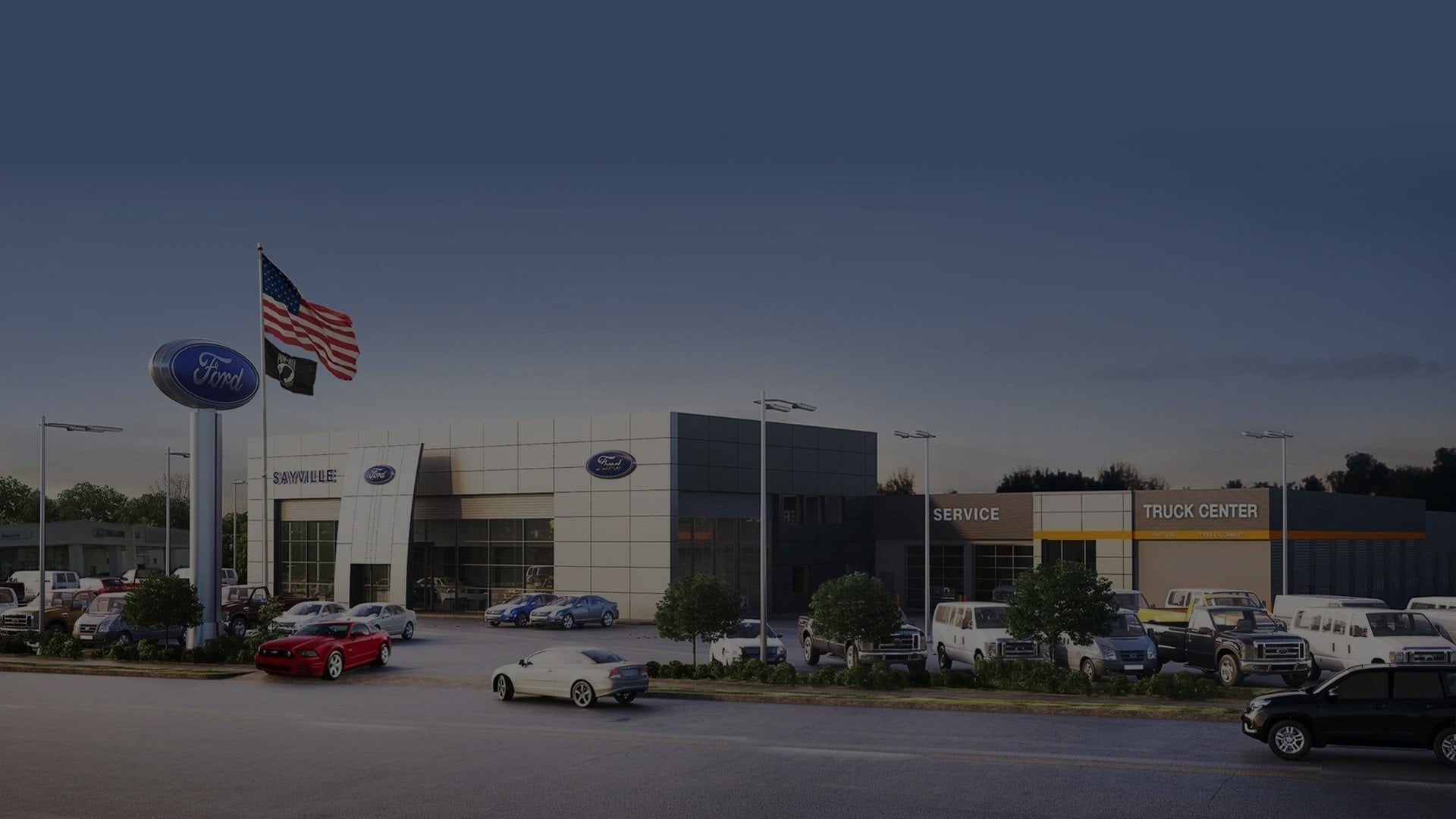


Ford Ranger Trims Explained: Work Truck or Weekend Truck
Posted at Mon, Nov 23, 2026 1:00 PM
THE SHORT ANSWER
Ford Ranger trims split into two general directions: XL and XLT handle work-truck duty with lower costs and solid efficiency, while Lariat and Raptor lean into comfort and performance for weekend driving. Every trim shares the same 43.5 cubic feet of cargo space and five-passenger seating, so the real decision comes down to engine output, drivetrain, and how much power or comfort you're willing to pay for.
Picking a truck off a lot is easy. Picking the right trim for how you actually use it is where most Ranger shoppers at Sayville Ford start asking real questions. This guide walks through every 2026 Ranger trim, from the work-focused XL to the desert-ready Raptor, so you can match the truck to your job site, your driveway, or your weekend plans.
IN THIS POST
- Why Trim Choice Matters More Than It Looks
- XL: The No-Nonsense Work Truck
- XLT: Where Most Buyers Land
- 2WD or 4WD: What Actually Changes
- Lariat: Comfort Catches Up to Capability
- Ranger Raptor: Built for the Weekend
- Fuel Economy Across the Lineup, Side by Side
- Cargo and Seating: The One Constant
- Key takeaways
Why Trim Choice Matters More Than It Looks

A Ranger built for hauling drywall five days a week doesn't need the same equipment as one that spends weekends pulling a boat out of the Great South Bay or climbing trails upstate. Trim level decides a lot more than cupholders and paint trim — it shapes drivetrain, fuel economy, and how much you're spending upfront.
Every 2026 Ranger shares the same bed capacity and seating for five, so the real differences come down to engine output, 2WD versus 4WD, and how much comfort tech comes standard. Someone running a contracting business cares about different numbers than someone chasing weekend trailheads. Walking through the lineup trim by trim makes the decision a lot less confusing than scrolling a build-and-price tool alone.
XL: The No-Nonsense Work Truck
The XL (2WD) starts the lineup at $33,550 and comes with the 2.3L EcoBoost engine with Auto Start-Stop Technology, producing 270 hp and rated at 21 city / 25 highway / 23 combined mpg. Cargo space lands at 43.5 cubic feet, and seating holds five — plenty for a two-man crew and a truck bed full of equipment.
Need four-wheel drive for muddy job sites or winter routes out toward the Pine Barrens? The XL (4WD) runs $37,050 with the same 270 hp EcoBoost and Auto Start-Stop setup, though mpg drops slightly to 19 / 24 / 21 with the added drivetrain hardware.
XL trims are built for people who want a dependable, no-frills truck that shows up and does the job. If that's your priority, it's worth starting your search by browsing new inventory to see what's currently on the lot.
XLT: Where Most Buyers Land
Step up to XLT (2WD) at $36,075 and you keep the same 2.3L EcoBoost engine and 270 hp, with mpg holding steady at 21 / 25 / 23 and cargo space unchanged at 43.5 cubic feet. What changes is the equipment list — XLT trims typically add convenience and tech features that make daily driving easier without pushing the price into Lariat territory.
For 4WD, the XLT (4WD) comes in at $39,575, again with 270 hp and the expected mpg dip to 19 / 24 / 21 once four-wheel drive enters the picture. It's a trim that splits the difference nicely between a stripped-down work truck and a loaded one.
A lot of Sayville-area buyers end up here because it covers both worlds reasonably well. Before you commit, it's always worth checking current offers since incentives shift month to month and can change which trim makes the most financial sense.
2WD or 4WD: What Actually Changes
This is one of the most common questions Ranger shoppers bring in, and the answer comes down to where you drive and what you tow or haul. Every 2WD Ranger trim — XL, XLT, or Lariat — carries the better mpg rating of 21 / 25 / 23, since there's less drivetrain hardware working against fuel economy.
Move to 4WD on any of those same trims and mpg settles at 19 / 24 / 21. That's a meaningful gap if most of your driving is commuting on paved roads like Sunrise Highway or the Southern State Parkway, where you may never need the extra traction.
- If your routes stay paved and dry most of the year, 2WD likely saves you money at the pump without costing you capability.
- If you're regularly on job sites, unpaved lots, or snow-prone routes, 4WD earns its keep.
Neither choice affects seating or cargo room — both stay at five seats and 43.5 cubic feet across the board.
Lariat: Comfort Catches Up to Capability

The Lariat (2WD) moves things upscale at $43,955, still running the 2.3L EcoBoost at 270 hp with 21 / 25 / 23 mpg. This is the trim where Ranger starts feeling less like a tool and more like a daily driver you actually look forward to climbing into.
Going with Lariat (4WD) brings the price to $47,455, keeping the 270 hp engine but shifting mpg to 19 / 24 / 21 with the added traction hardware. Cargo space holds at 43.5 cubic feet and seating stays at five, so you're not giving up practicality for comfort — you're adding to it.
Lariat makes sense for buyers who want one truck to handle both a work week and a weekend trip without feeling like a compromise in either direction. If the jump in price has you thinking about monthly payments rather than sticker price, our financing team can walk through what that actually looks like for your situation.
Ranger Raptor: Built for the Weekend
At the top of the lineup sits the Raptor, priced at $57,270 and running a completely different engine than the rest of the Ranger family — a 3.0L EcoBoost with Auto Start-Stop Technology putting out 405 hp. That's a substantial jump from the 270 hp found across XL, XLT, and Lariat trims, and it changes what the truck is actually for.
Fuel economy reflects that extra power, landing at 16 city / 18 highway / 17 combined mpg. Cargo space stays consistent with the rest of the lineup at 43.5 cubic feet, and seating holds at five, so you're not losing practicality — you're trading some efficiency for serious capability.
Raptor isn't the trim for someone chasing the lowest fuel bill. It's for someone who wants a truck that can handle trails, dunes, or just aggressive weekend driving without feeling out of its depth. If you've got a trade-in sitting in the driveway and you're eyeing a jump this big, it's worth getting a number through value your trade before you start comparing payments.
Fuel Economy Across the Lineup, Side by Side

Fuel economy is one of the clearest ways to separate these trims when the sticker prices start blending together. Four of the six EcoBoost trims — XL (2WD), XLT (2WD), and Lariat (2WD) — share the same 21 / 25 / 23 mpg rating, since they're all running the same 2.3L EcoBoost engine without the drag of four-wheel drive.
Switch any of those to 4WD and the number settles at 19 / 24 / 21 across XL, XLT, and Lariat alike. Raptor stands apart entirely at 16 / 18 / 17, a direct result of the larger 3.0L engine and the extra 135 hp it brings to the table.
For a buyer doing a lot of daily miles on the LIE or commuting into western Suffolk, that gap between 2WD and 4WD mpg adds up over a year. For someone using the truck occasionally on weekends, it may matter far less than torque and ground clearance.
Cargo and Seating: The One Constant
Here's something that simplifies the decision — cargo space and seating don't change no matter which trim you choose. Every 2026 Ranger, from the base XL (2WD) to the top-tier Raptor, carries 43.5 cubic feet of cargo room and seats five people.
That means you're never giving up bed space or passenger room to get a nicer interior or more power. Whatever trim fits your budget and driving needs, the bed behind you stays just as useful.
It also means maintenance planning stays consistent across the lineup. Our technicians are Ford factory-trained and certified, and service work across any Ranger trim uses genuine Ford Motorcraft parts, so keeping the truck running right doesn't change based on which trim you drove off the lot.
Where
5686 Sunrise Hwy
Sayville, NY
Sayville, NY
Call
KEY TAKEAWAYS
- XL and XLT share the same 270 hp EcoBoost engine and mpg ratings within matching drivetrains, differing mainly in features.
- 4WD trims trade a few mpg for traction, dropping from 21/25/23 to 19/24/21 across XL, XLT, and Lariat.
- Raptor stands apart with a 405 hp 3.0L EcoBoost engine built for weekend performance rather than daily fuel economy.
FAQ
Common questions
What's the real difference between XL and XLT trims?
Both run the same 2.3L EcoBoost engine at 270 hp with identical mpg ratings in matching drivetrain configurations. The difference comes down to equipment and features rather than power or capability, with XLT generally offering more standard convenience items for a few thousand dollars more.
Does 4WD hurt fuel economy much?
Across XL, XLT, and Lariat trims, moving from 2WD to 4WD drops mpg from 21 / 25 / 23 to 19 / 24 / 21. It's a modest difference, but worth considering if most of your driving stays on paved roads.
Is the Ranger Raptor worth the jump in price?
That depends on what you need from the truck. Raptor's 405 hp and performance-oriented engineering come at a real cost in fuel economy, so it makes the most sense for buyers prioritizing weekend capability over daily efficiency.
Do all Ranger trims have the same bed and seating?
Yes. Every trim, from XL through Raptor, holds 43.5 cubic feet of cargo space and seats five people, so trim choice doesn't limit practicality.
Can I test drive a Ranger without coming to the dealership first?
Sayville Ford offers video walkarounds, at-home test drives, home delivery, and online purchasing, so you can get a feel for a trim before ever stepping onto the lot.
Want to see it in person?
Browse what is on the lot right now, or come by and see it in person.
Or call (631) 589-4800 · 5686 Sunrise Hwy, Sayville