

Ford F-150 Safety Features Explained
Posted at Thu, Oct 15, 2026 12:00 PM
THE SHORT ANSWER
The Ford F-150 comes with a wide set of driver-assist and crash-prevention technologies built around what Ford calls Co-Pilot360, plus a cab and frame engineered to protect you if a crash still happens. Together these systems watch the road, the lanes around you, and the space behind your trailer so you catch problems before they become accidents. The best next step is seeing them work in person at Sayville Ford in Sayville.
Picture this: you're merging onto Sunrise Highway with a cup of coffee balanced in the console, a kid in the back seat asking about breakfast, and a line of brake lights appearing out of nowhere up ahead. That split second is exactly what Ford engineers had in mind when they built the safety systems into the F-150. Sayville Ford sees these trucks every day, and this guide walks through what those features actually do, in plain language, so you know what you're getting before you ever get behind the wheel.
$39,585
Starting MSRP
52.8 cu ft
Cargo space
450 hp
Up to, horsepower
2026 Ford F-150, from its published specifications.
IN THIS POST
- The Moment That Safety Tech Is Built For
- What Co-Pilot360 Actually Bundles Together
- Keeping You From Hitting What's Ahead
- Staying Between the Lines Without Thinking About It
- Seeing What's in Your Blind Spots, Trailer and All
- Backing Up and Working in Tight Spaces
- What Protects You If Something Still Goes Wrong
- Putting This Into Practice at Sayville Ford
- Key takeaways
The Moment That Safety Tech Is Built For
Most people don't think about safety features until the moment they need one. Maybe it's the car ahead slamming its brakes, a cyclist appearing in your blind spot, or backing out of a packed parking lot with a trailer hitched up. The F-150 is built with a layered approach: some systems watch the road ahead, some watch your sides and rear, and some are just there for the worst-case scenario.
Understanding what each piece actually does changes how you drive, because you start trusting the truck to catch things you'd otherwise miss. That's the real value here, not a checklist of buzzwords. The sections below break down each layer so you can picture it happening in your own daily drive.
What Co-Pilot360 Actually Bundles Together
Ford groups a handful of its core driver-assist features under one name: Co-Pilot360. Rather than picking and choosing individual add-ons, you get a set of systems working together as a package on most trims. That includes forward collision warning, automatic emergency braking, lane-keeping assistance, and a rearview camera, among others.
The idea is simple: a truck should help you notice danger before you do, not just report it after the fact. Because these tools come bundled, you're not stuck weighing which safety feature is worth paying extra for. If you want to see exactly which systems ride on which trim, it's easiest to sit down and browse the F-150 lineup with someone who can point out the differences model to model.
Keeping You From Hitting What's Ahead
Pre-collision assist is the system doing the watching when traffic ahead slows faster than you expect. It uses forward sensors to judge the gap between you and the vehicle in front, and if it senses you're closing in too fast, it warns you first. If you don't react in time, automatic emergency braking can apply the brakes on its own to help reduce the severity of impact.
This matters most in stop-and-go traffic or when you're distracted for even a second, which is most of us at some point. It's not a replacement for paying attention, but it's a second set of eyes when yours are on the radio dial instead of the road. Drivers moving up from an older truck, including those looking at a certified pre-owned F-150, often notice this is the single biggest change from older models.
Staying Between the Lines Without Thinking About It
Drifting happens. A long highway stretch, a yawn, a glance at a text message, and suddenly you're closer to the shoulder or the center line than you meant to be. Lane-keeping systems on the F-150 monitor the markings on the road and give you a nudge, sometimes a vibration in the wheel, sometimes gentle steering input, to guide you back toward center.
These systems aren't trying to drive for you. They're built to catch the small, human moments of inattention that cause a surprising number of single-vehicle accidents. On a long commute or a road trip hauling gear out east, that extra layer of correction adds up over hundreds of miles, even if you never consciously notice it kick in.
Seeing What's in Your Blind Spots, Trailer and All
A full-size truck has real blind spots, and towing a trailer makes them longer. The blind spot information system on the F-150 is built to account for this, extending its coverage zone when a trailer is hooked up so it's watching the space along the whole length, not just the truck bed.
Paired with cross-traffic alert, which checks for vehicles approaching from the side when you're backing out of a spot, this combination covers the exact situations where mirrors alone fall short. A few things worth knowing:
- Blind spot alerts typically show up as a light in or near the side mirror
- Trailer coverage adjusts automatically once a trailer is connected
- Cross-traffic alerts are most useful in parking lots and driveways with limited sightlines
It's one of the features truck owners mention most once they've actually towed with it.
Backing Up and Working in Tight Spaces
Trucks are long, and that length gets harder to manage the moment you add a trailer or load the bed high enough to block the rear window. A rearview camera is standard for exactly this reason, giving you a clear look at what's directly behind you instead of guessing based on mirrors.
Pro Trailer Backup Assist takes this further, letting you steer a knob rather than fight the trailer's natural tendency to swing the opposite direction of your wheel. Reverse sensing adds audible alerts as you get close to an object. If you're comparing a new model to a used F-150 on the lot, this is one area where even a few model years can mean a noticeable jump in how much help you get while parking.
What Protects You If Something Still Goes Wrong
No amount of driver-assist technology makes a crash impossible, which is why the F-150's structure matters just as much as its sensors. The cab is built around high-strength steel designed to manage impact energy and help protect the space around the driver and passengers. Multiple airbags are positioned to respond to different kinds of collisions, not just head-on impacts.
Some trims also include a post-crash alert system, which can notify emergency services after a serious collision even if no one inside is able to call for help. It's the kind of feature you hope to never need, but it's there specifically for the moments when the driver-assist systems couldn't prevent what happened. Structural safety and electronic safety aren't competing approaches, they're meant to work as a pair.
Putting This Into Practice at Sayville Ford
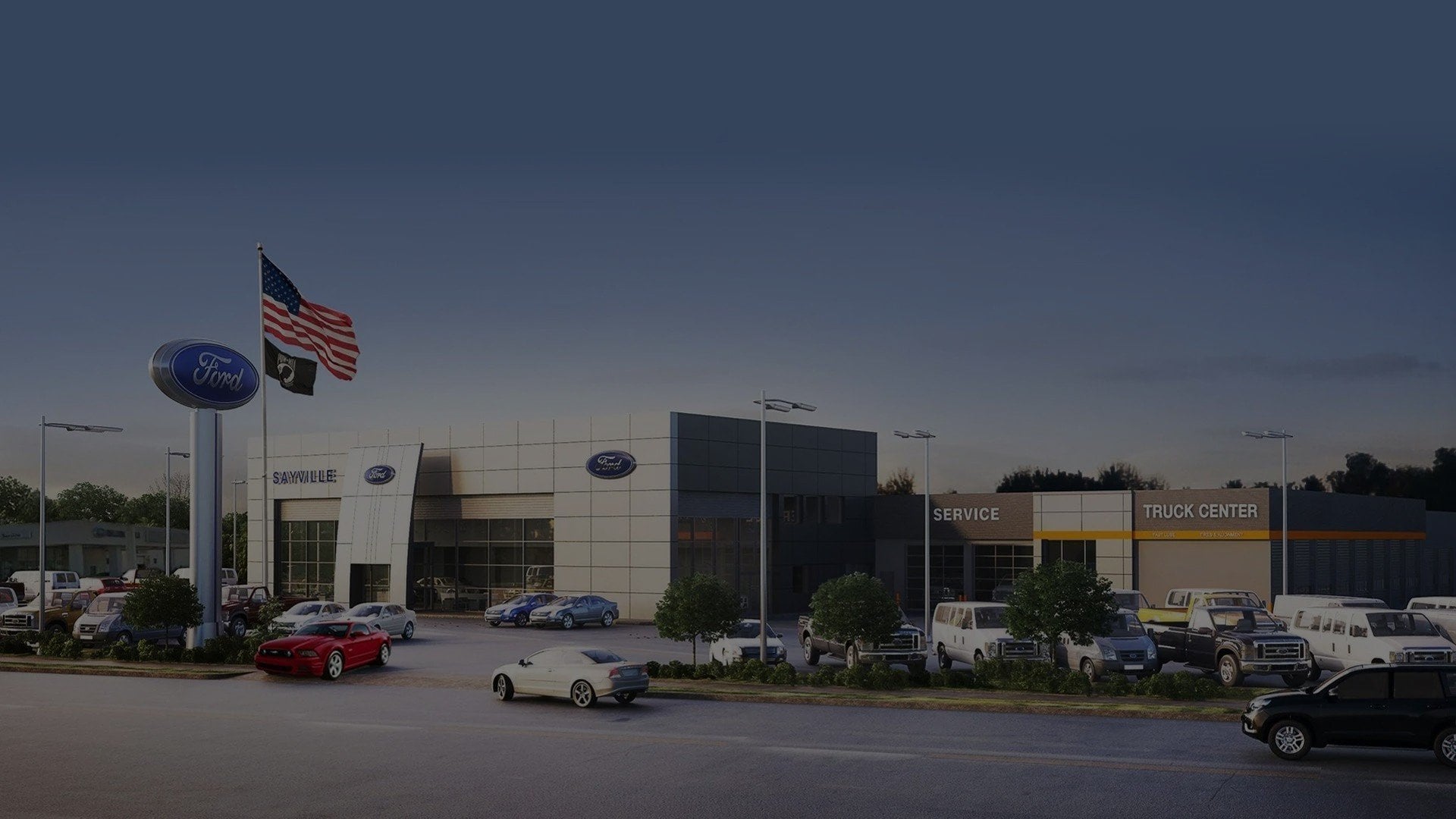
Reading about lane-keeping assist or blind spot monitoring only gets you so far. The real test is sitting in the driver's seat, merging onto a real highway, and feeling the wheel nudge back when you drift. Sayville Ford has been doing this in the same town since 1957, run by three generations of the same family, which tends to make the walkaround conversation a lot less rushed and a lot more honest.
If you're deciding between trims, it helps to talk through which safety packages come standard versus which ones are optional on certain configurations. When you're ready to look at numbers, exploring financing options is a separate conversation from the safety walkthrough, so don't feel like you need to decide everything at once. And once the truck is yours, Ford factory-trained, certified service technicians are the ones keeping those sensors calibrated and those systems working the way they're supposed to for years down the road.
Where
5686 Sunrise Hwy
Sayville, NY
Sayville, NY
Call
KEY TAKEAWAYS
- Co-Pilot360 bundles several driver-assist features as standard equipment on most F-150 trims, not an expensive add-on package.
- These systems are built to help you react faster to things like sudden braking, drifting out of your lane, and blind spots around a trailer.
- A test drive is the only real way to feel how the alerts, braking assist, and cameras work together on actual roads.
|
FAQ
Common questionsAre these safety features standard on every F-150 trim?Most of the core Co-Pilot360 features come standard across the lineup, but some advanced options vary by trim and package. The best way to know exactly what's included on a specific truck is to walk through it with someone on the lot, since it can change year to year.
Do these systems replace the need to pay attention while driving?No. They're designed as a backup layer to help in the moments a driver misses something, not a substitute for actively watching the road, your mirrors, and your surroundings.
Will towing a trailer affect how the safety systems work?Some systems, like blind spot monitoring, actually extend their coverage once a trailer is connected so they account for the added length. Others, like automatic emergency braking, are tuned with towing in mind but still require you to drive at a sensible following distance.
Can I get these features on a used or certified pre-owned F-150?Many recent-model used and certified pre-owned F-150 trucks carry the same Co-Pilot360 features as current models, depending on the model year and trim. It's worth checking which systems are included on any specific used truck before assuming they match a brand-new one.
What happens if a safety sensor needs service or recalibration?Sensors behind the grille, windshield, or bumper sometimes need recalibration after certain repairs, like a windshield replacement or front-end work. Scheduling that with a service department familiar with Ford's specific calibration process helps make sure the systems keep working the way they were designed to.
|
|
Want to see it in person?
Browse what is on the lot right now, or come by and see it in person.
Or call (631) 589-4800 · 5686 Sunrise Hwy, Sayville
|