

Ford Escape Trims Explained: Finding the Right Fit for Your Family
Posted at Mon, Nov 9, 2026 1:00 PM
THE SHORT ANSWER
The Escape's eight trims come down to three choices: the smaller 1.5L EcoBoost in the Active and ST-Line trims with front- or all-wheel drive, the stronger 2.0L EcoBoost with all-wheel drive in the ST-Line Select, Platinum and ST-Line Elite, or the front-wheel-drive Plug-In Hybrid. Most families should start by deciding how much winter driving, highway time and home charging matter to them.
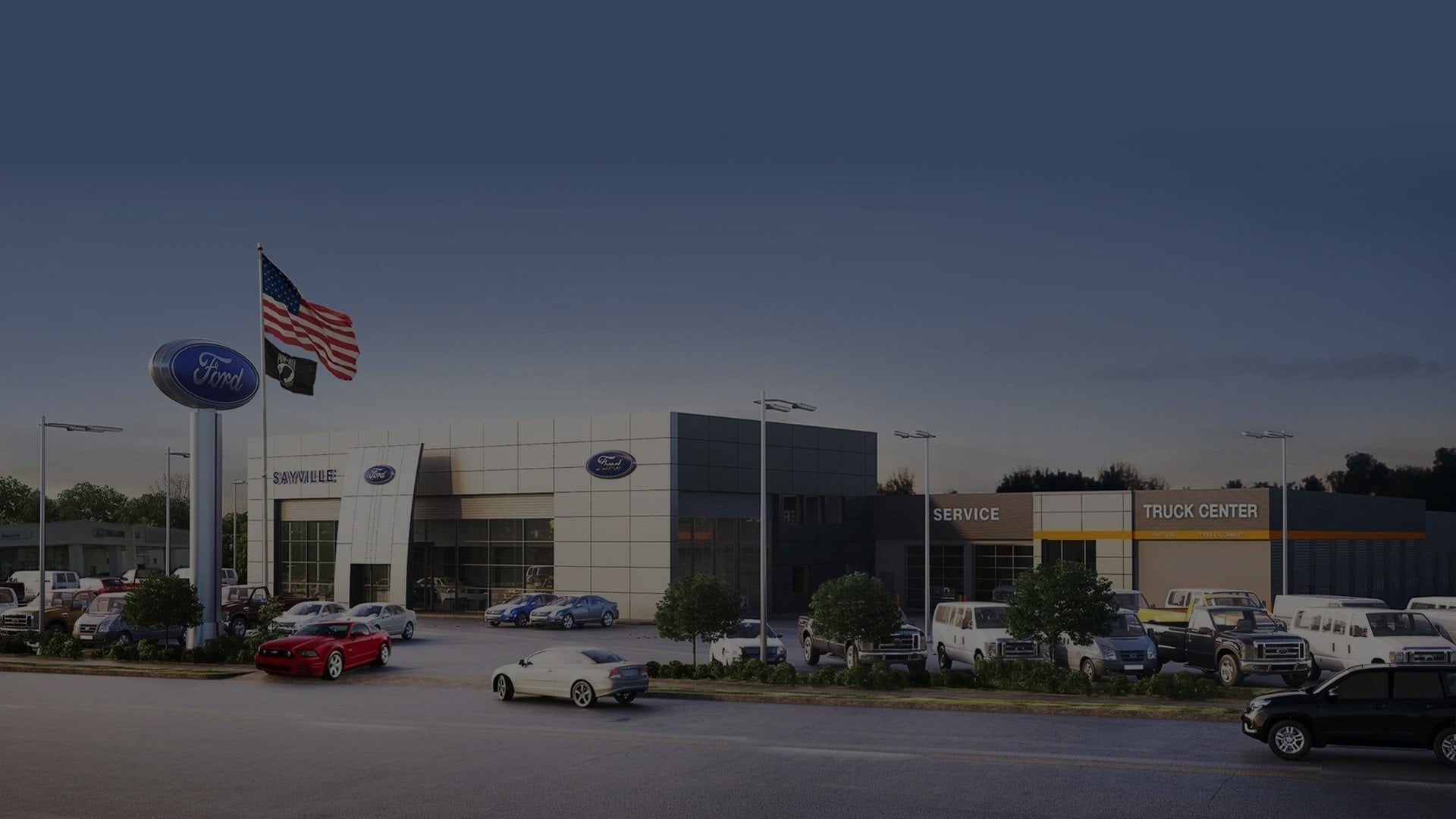
Plenty of families come into Sayville Ford in Sayville knowing they want a Ford Escape, then stall when they see eight trim names on the window stickers. Most of those names are variations on a few core choices, and once you see how they line up, picking one gets much easier. Here's how we walk our own customers through the lineup, with Long Island driving in mind.
IN THIS POST
- Eight trims, three powertrains
- Active and ST-Line with front-wheel drive
- When all-wheel drive is worth it
- ST-Line Select: stepping up to the bigger engine
- The Plug-In Hybrid
- Platinum and ST-Line Elite: the top of the range
- Room for car seats, strollers and beach gear
- Matching a trim to your family
- Key takeaways
Eight trims, three powertrains

Ford builds the 2026 Escape in eight trims. That sounds like a lot, but underneath there are only three powertrains: a smaller turbocharged EcoBoost four-cylinder, a larger EcoBoost, and a plug-in hybrid. Once you know which engine fits your life, most of the decision is already made.
Think of the lineup as a ladder with a branch off to one side. The Active and ST-Line trims share the smaller engine and let you choose front-wheel or all-wheel drive. Climb higher and the ST-Line Select, Platinum and ST-Line Elite move to the bigger engine, with all-wheel drive standard. Off to the side sits the Plug-In Hybrid, which follows its own logic.
Some things stay the same as you climb. Seating doesn't grow, and the basic shape and size of the vehicle don't change either. What you're really choosing between is how the Escape drives, how it handles winter, what it costs to fuel, and how much you want to spend up front.
So for a family, the real questions are pretty simple:
- How often do you drive in snow, slush or freezing rain?
- Do you spend more time on local roads or the highway?
- Could you plug in at home every night?
- What monthly payment feels comfortable?
We'll take those one at a time, starting at the bottom of the ladder.
Active and ST-Line with front-wheel drive
The most affordable way into an Escape is the Active (2WD), with an MSRP of $30,350. For a family that mostly sticks to Montauk Highway, school drop-off and the weekly grocery run, it covers the basics without charging you for things you won't use.
Power comes from the 1.5L EcoBoost with Auto Start-Stop Technology, rated at 180 hp. That's enough to merge onto Sunrise Highway with a full back seat. Start-stop shuts the engine off at red lights and restarts it when you lift off the brake, which saves fuel in stop-and-go traffic.
Front-wheel drive earns its keep in fuel economy: 27 mpg city and 34 highway. If your commute leans on the Long Island Expressway, that highway number is the one you'll feel at the pump.
Next up is the ST-Line (2WD) at $31,195. It shares the same engine, drivetrain and fuel economy as the Active, so mechanically you're getting the same thing. The choice between them comes down to which one you like better when they're parked side by side, and we're happy to line them up for you.
If you're replacing an older car, trading it in can close part of the gap between trims. You can value your trade online before you come in, so you walk in with a number already in mind.
When all-wheel drive is worth it
Long Island doesn't get mountain-town winters. Still, a nor'easter can turn Route 27 and the side streets around Sayville into slush overnight, and parking lots near the water ice up fast.
All-wheel drive sends power to all four wheels when the front ones start to slip, so you pull away cleanly from a slick intersection or a snowy curb. It won't help you stop or steer any better. Good tires still do most of the work there, so budget for them whatever you buy.
You can add all-wheel drive to either entry trim. The Active (AWD) carries an MSRP of $31,750, and the ST-Line (AWD) comes in at $32,595.
There's a small fuel economy trade-off. Both AWD versions are rated at 26 mpg city and 32 highway, a bit below their front-drive twins. Over a year of normal driving, that difference is modest, but it's real.
Our honest take: if you park on the street, leave for work before the plows come through, or head north for a ski weekend once or twice a winter, the AWD versions deserve a close look. A car that sleeps in a garage, owned by someone who can wait for the roads to clear, will do fine with front-wheel drive and a set of winter tires.
ST-Line Select: stepping up to the bigger engine
The ST-Line Select is where the Escape changes character. It moves to the 2.0L EcoBoost with Auto Start-Stop Technology, making 250 hp, and all-wheel drive comes standard with it.
That extra muscle shows up most when the car is loaded. Picture five people, a cooler and beach chairs headed over the Robert Moses Causeway, or a full cargo area on the way to see family upstate. Passing on a two-lane road feels more relaxed, and short on-ramps take less planning.
You pay for it at the pump, though not dramatically. Ford rates this engine at 26 mpg combined, compared with 28 combined for the smaller engine with all-wheel drive.
With an MSRP of $35,015, the ST-Line Select is the least expensive way into the larger engine. Drivers who've tried an Active and wished for a little more punch usually find what they were missing here. Drive them back to back on the same stretch of road and you'll know within a few minutes whether the difference matters to you.
If the step up stretches your budget, our team can walk you through financing options and show how different terms change the monthly payment. Approval and rates depend on your credit and the lender, so it's worth having that conversation early.
The Plug-In Hybrid
The Escape Plug-In Hybrid pairs a 2.5L iVCT Atkinson Cycle four-cylinder with electric power, and the system makes 210 hp. That's more than the smaller EcoBoost, so it doesn't feel like a compromise when you merge or pass.
Its headline number is 101 MPGe combined. MPGe is the yardstick for vehicles that run partly on electricity, and it reflects driving with a charged battery rather than what you'd see from the gas engine alone.
Who it suits
It works best for families with short, predictable trips: school, practice, the train station, errands around Sayville and Bayport. Plug it in overnight in the garage or driveway, and much of that local driving can lean on electricity. On longer trips the gas engine takes over, so there's no worrying about where to charge on the way to the East End.
What to weigh
Two things to know before you commit. It's front-wheel drive only, so if all-wheel drive is a must for you, this one's off the list. It also gives up some cargo room compared with the gas models, which matters if you haul a lot.
Its MSRP is $35,400, right in line with the ST-Line Select. That makes those two the natural comparison: one gives you more power and all-wheel drive, the other gives you the lowest fuel use in the lineup.
Platinum and ST-Line Elite: the top of the range
Platinum
The Platinum carries an MSRP of $37,940. It uses the same bigger engine and all-wheel drive as the ST-Line Select, so you're not paying for more power. You're paying for the trim level itself and what Ford includes at that step.
Families who spend long hours in the car, or who keep a vehicle for many years, often decide that a more upscale cabin is money well spent. Others find the ST-Line Select already covers what they need.
ST-Line Elite
At $38,935, the ST-Line Elite sits at the very top of the Escape lineup. Like the Platinum, it shares its engine and drivetrain with the ST-Line Select. Think of it as the top of the ST-Line branch, while the Platinum takes a different direction at roughly the same level.
Before you step up to either one, sit in an ST-Line Select first, then in the Platinum and the ST-Line Elite, one right after another. Ask us to show you exactly what changes from one to the next. If those differences are things your family will use every day, the upgrade makes sense. If not, the savings can go toward accessories, winter tires or a shorter loan.
It's also worth checking our current offers on new Fords before you decide, since incentives can shift which trim makes the most sense in a given month.
Room for car seats, strollers and beach gear

No matter which trim you pick, the Escape seats five. That means two up front and three in back, which works well with two kids in car seats and gets snug once a third seat goes in. Families expecting a third child, or who regularly carpool, should test that back row carefully before buying.
Gas models offer up to 65.4 cubic feet of cargo space with the rear seats folded. The Plug-In Hybrid comes in at 60.8, a bit less, so if you choose it, make sure your biggest regular load still fits.
The best test is your own gear. When you come in, bring the things that ride with you every week and try them in the back:
- Your stroller, folded the way you normally fold it
- A rear-facing infant seat or a bulky convertible seat
- Hockey bags, lacrosse sticks or a soccer team's worth of cleats
- A beach cart and umbrella for summer weekends at Fire Island
Pay attention to lift-over height too. If you're loading a heavy stroller or groceries several times a week, how high you have to raise things matters more than an extra inch of floor space.
Once you know what fits, you can browse our new Ford Escape inventory by trim and color and narrow the list before you visit.
Matching a trim to your family

After years of helping families sort through the lineup, we've noticed most people land in one of a handful of situations. Here's how they tend to line up:
- Budget comes first, driving is mostly local: Active (2WD) or ST-Line (2WD).
- Street parking or early winter commutes: Active (AWD) or ST-Line (AWD).
- Lots of highway miles with a full car: ST-Line Select.
- Short daily trips and a place to plug in: Plug-In Hybrid.
- You want the most comfortable, best-equipped Escape: Platinum or ST-Line Elite.
Plenty of families straddle two of those. A parent who commutes on the LIE all week but wants to feel confident in a February storm might weigh an AWD ST-Line against the ST-Line Select. In that case, the deciding factor is usually whether the bigger engine is worth the extra cost to you.
Be honest about how you'll use the car three years from now, too. Kids grow, sports gear multiplies, and a teenager may be learning to drive in it. A trim that feels like a stretch today can turn out to be the right call.
Don't overlook a lightly used model either. A certified pre-owned Escape can put a higher trim within reach of a lower budget, and it's worth comparing side by side with a new one.
Where
5686 Sunrise Hwy
Sayville, NY
Sayville, NY
Call
KEY TAKEAWAYS
- Pick the powertrain first; it narrows eight trims to two or three.
- All-wheel drive helps you get moving in snow, but good tires still matter most.
- Every Escape seats five, so bring your car seats and stroller to the test drive.
FAQ
Common questions
Which Escape trim is the best value for a family?
For most families on a budget, the Active is the best value. Choose front-wheel drive if you mostly drive local roads and keep the car in a garage, or all-wheel drive if you park outside or commute early through winter weather. Both share the same engine, so you aren't giving up power to save money.
Do I really need all-wheel drive on Long Island?
Not always. It helps most when you're pulling away on snow, slush or ice, which is why street parkers and early commuters tend to appreciate it. If your car lives in a garage and you can wait for the plows, front-wheel drive with good winter tires handles most Long Island winters well.
Can I get the Plug-In Hybrid with all-wheel drive?
No. The Plug-In Hybrid comes with front-wheel drive only. If all-wheel drive is a must, look at the AWD Active and ST-Line trims or anything from the ST-Line Select up.
Does any Escape trim have a third row?
No. Every Escape seats five, from the Active through the ST-Line Elite. If you regularly need room for six or more, ask us about Ford's larger SUVs, and we'll walk you through how they compare.
Can Sayville Ford help me finance an Escape?
Yes, our team can help you apply and compare options from different lenders. Approval, rates and terms depend on your credit history and the lender's decision, so we can't promise a particular outcome. We'll still lay out the choices clearly so you can pick what fits your budget.
Want to see it in person?
Browse what is on the lot right now, or come by and see it in person.
Or call (631) 589-4800 · 5686 Sunrise Hwy, Sayville