

How to Measure Ford Brake Pad Wear in Suffolk County (No Wheel Removal)
Posted at Wed, Jun 10, 2026 9:00 AM
Summer driving around Suffolk County means a lot more time on the brakes. Stop-and-go traffic on the Long Island Expressway, slow lines getting to the Fire Island ferries, and crowded Sunrise Highway ramps all put extra stress on your Ford. Knowing how to check your brake pads at home without removing the wheels helps you stay safer and catch problems early.
In this guide, we will walk through simple signs of brake wear, basic tools you can use in your driveway, and how to get a rough idea of your pad thickness through the wheels. We will also cover what those measurements actually mean and when it is time to plan professional Ford brake pad replacement in Suffolk County.
Stay Safer by Checking Your Ford Brakes at Home
Healthy brake pads help your Ford stop quickly and smoothly. When pads get thin, stopping distances grow, the pedal can feel different, and you can start to hear or feel things that do not seem right. If pads wear too far, the metal backing can grind against the rotors and lead to much more expensive repairs.
You can catch a lot of issues with a simple visual check at home, even if you do not own a floor jack or any special tools. A quick look through the wheels can help you spot thin pads, uneven wear, or damage before a long road trip or busy weekend on the South Shore.
If your home check shows anything that worries you, a professional shop that works with Ford vehicles every day can step in and handle the full brake inspection and replacement for you.
Know the Signs Your Ford Brake Pads Are Wearing Down
Before you grab a flashlight, pay attention to how your Ford feels and sounds on the road. Common warning signs of worn brake pads include:
- High-pitched squealing when you press the brakes
- Grinding noises that sound like metal-on-metal
- A soft, spongy, or low brake pedal
- Shaking or pulsing in the steering wheel or brake pedal
- The vehicle pulling to one side during braking
Modern Ford models may also warn you through lights on the dash. Some common ones are:
- Red brake warning light
- ABS light staying on after startup
- Electronic parking brake warning messages
Any warning light related to the brake system should be taken seriously. It can point to low fluid, system problems, or issues with pad wear that you should not ignore.
Summer driving can speed up brake wear too. Long stretches of stop-and-go traffic, hot pavement and towing a boat or camper out toward the Hamptons all make your brakes work harder and hotter. If you notice any of these symptoms, a quick home inspection is a smart next step before you plan Ford brake pad replacement in Suffolk County.
Tools and Prep for a No-Wheel-Removal Brake Check
You do not need a full toolbox to get a decent view of your brake pads. Simple, common items work well:
- Bright flashlight or work light
- Small inspection mirror or your smartphone camera
- Tape measure or simple brake pad thickness gauge
- Gloves to keep hands clean and protected
- Wheel chocks or bricks to block the tires
Safety comes first. Follow these steps before you start:
- Park on level ground away from traffic
- Put the transmission in Park and set the parking brake
- Shut off the engine and remove the key or fob
- Chock the wheels so the vehicle cannot roll
- Let the brakes cool if you were just driving, as rotors and calipers get very hot
To see the front brakes more easily, turn the steering wheel slightly left or right while the engine is running, then shut it off and remove the key. The front wheels will stay turned so you can look through the spokes.
Many Ford cars, SUVs, and trucks have open-spoke wheels, which is great for this kind of check. Some models also have pad wear sensors that can trigger dash warnings when pads get low, but a visual check is still helpful.
How to See and Measure Brake Pad Thickness on Your Ford
Once you are set up, it is time to find the pads. Work on one wheel at a time so you do not lose track of what you have checked.
1. Use your flashlight to look through the wheel openings.
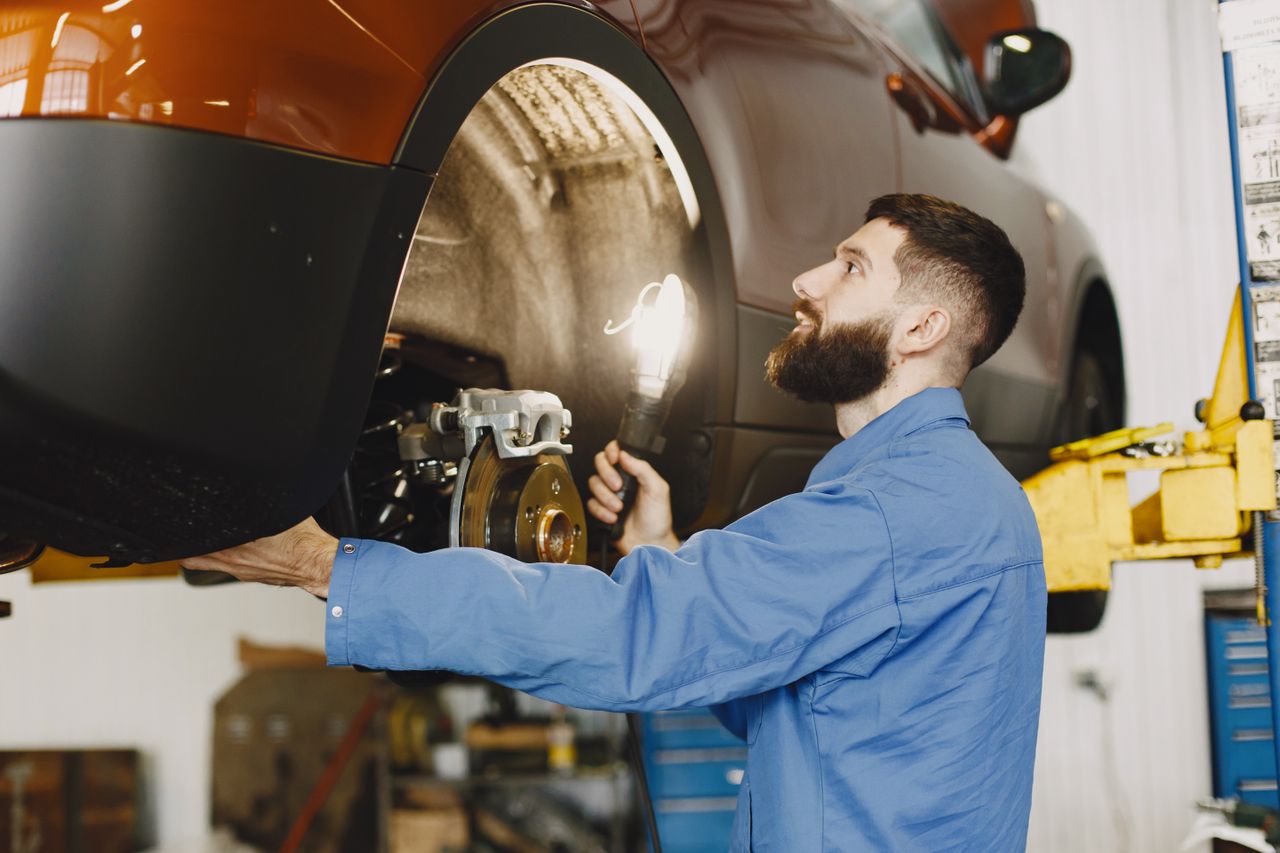
2. Find the brake caliper, the big metal clamp that sits over the round rotor.
3. The brake pads sit inside the caliper, one on each side of the rotor.
4. Look for the pad material, a flat block of friction material pressed against the rotor, sitting on a metal backing plate.
You want to see how thick that friction material is, not the metal backing plate. The outer pad is usually easier to see, but try to view the inner pad as well if you can, using a mirror or your phone camera set to video or photo mode.
To estimate thickness without removing the wheel:
- Shine the light at the pad edge so you can clearly see the friction material.
- Compare it, in your mind, to something familiar. A standard pencil eraser is roughly 4 to 5 mm thick.
- If you have a pad thickness gauge or a small ruler, hold it near the pad edge through the wheel openings and read the approximate thickness.
General guidelines:
- New brake pads are often around 10 to 12 mm of friction material
- Around 3 to 4 mm, it is time to plan service soon
- Around 2 to 3 mm or less, it becomes urgent and you should not delay
Uneven wear is a concern. If the inner pad looks much thinner than the outer pad, or one wheel looks much different than the others, that can point to a sticking caliper or other problem.
While you are there, also look at:
- The rotor surface, checking for deep grooves or scoring
- Any blue or purple discoloration on the rotor, a sign of overheating
- Any shiny metal-on-metal contact where pad material seems gone
If you see any of these, avoid long trips or high-speed driving and plan to get the brakes inspected by a professional as soon as possible.
When to Plan Professional Ford Brake Service in Suffolk County
Once you have a rough idea of your pad thickness, you can use some simple rules to decide what to do next:
- Around 4 mm, start planning brake service soon, before a big road trip
- Around 3 mm or less, book brake service now
- Any metal grinding noises or clearly scored rotors, do not wait
There are also non-visual signs that mean you should have a trained technician check the system:
- The brake pedal suddenly feels softer, harder, or sinks lower than normal
- You notice fluid around the inside of a wheel or on your driveway near a wheel
- There is a sharp burning smell after heavy braking
- ABS or brake warning lights stay on
Local conditions around Long Island can be hard on brake parts. Salt air near the coast, moisture, leftover winter road salt, and heavy summer traffic can all add up over time. That is why timely Ford brake pad replacement in Suffolk County is so important for safe, reliable stopping.
A professional shop that focuses on Ford vehicles can inspect not just the pads, but also rotors, calipers, slides, and brake fluid, and can replace worn parts with components that match your vehicle. Factory-trained technicians and genuine Ford or Motorcraft parts help your brakes feel like they should and work the way the engineers designed them to.
Sayville Ford is a family-owned Ford dealership in Sayville, NY, serving drivers throughout Sayville, Patchogue, Bayport, and the wider Suffolk County area with new and used vehicles, service, parts, and financing. When your home brake check points to thin pads, noise, or anything that makes you uneasy, our team is here to help you keep your Ford ready for every drive across Long Island.
Schedule Expert Brake Care Before Wear Becomes a Safety Risk
If your measurements or brake checks raise any concerns, let our factory-trained technicians at Sayville Ford take a closer look. We can inspect your pads, rotors, and fluid, then recommend the right service or Ford brake pad replacement in Suffolk County for your vehicle and driving habits. To ask a question or request an appointment that fits your schedule, simply contact us and we will be ready to help.